

From Rituals to Reforestation: A Village Awakens
For days, the skies had stayed clear, not a single cloud in sight. Across the valley, the Timal hill was completely covered in mist, possibly due to the prolonged drought. Rain seemed like a far-off dream. Ashram uncle, like always, kept looking towards the sky, calling upon the rain god, praying with all his heart, hoping for rain. But there was no sign the gods were listening.
One day, out of desperation, the villagers gathered under a chautari at the center of the village for a symbolic ritual “ frog wedding”, hoping to please the god of the rain. I sat quietly watching the unusual ritual among the villagers. The renowned priest, Devadatta Panta, was chanting wedding mantras as a part of the old-aged tradition. In a village that survives on rain-fed farming, the long drought had caused immense suffering. The cattle were forced to chew on dry straw and corn husks, trying to erase the memory of green grass. Farming tools, once a source of pride, now sat rusting and unused. Even the trees and plants seemed to wither and dry from thirst.
It was probably Monday. With no rain, work had come to a halt. I sat in the sun, idle and restless, when a friend called out, “There’s a program at the municipality office today, let’s go! Maybe we’ll learn something.” With no work and nothing to lose, I agreed.
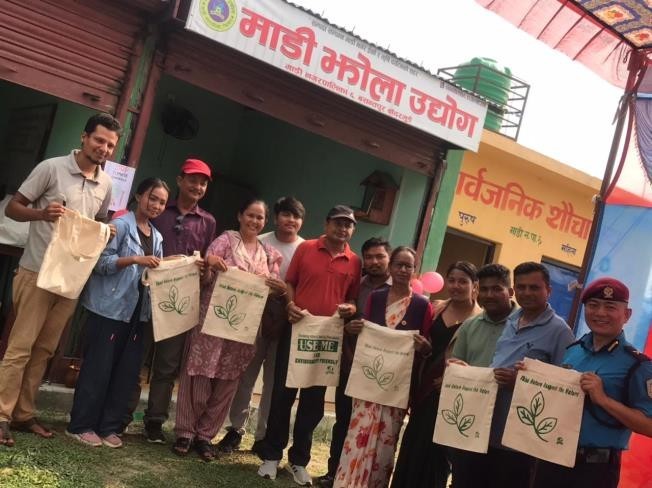
The event was organized by an NGO called CWISH, which had come to our area to raise awareness about climate and environmental issues. After discussions with the villagers, the representatives explained that the unusual weather patterns, such as lack of rain, extreme rainfall and drought, were all linked to climate change.
Hearing about climate change made the villagers laugh. But I listened intently. I wanted to know more: the causes, the effects, the risks and most importantly, the ways to mitigate and adapt the climate change. When I learned that humans were the main contributors to this problem, through carbon emissions, pollution and deforestation, I was both disturbed and deeply moved.
As soon as I heard the program was youth-focused, I eagerly joined and began to understand the problems my village was directly facing. A commitment to work for a solution awakened within me. Last year, my house was destroyed due to a landslide from the hill above my friend Ramesh’s house. Suman’s fertile fields had turned to a gravel bed due to flash floods. In recent years, natural disasters have brought severe challenges to our village. And it didn’t take long for local youth to realize: climate change was behind it all.
To move the
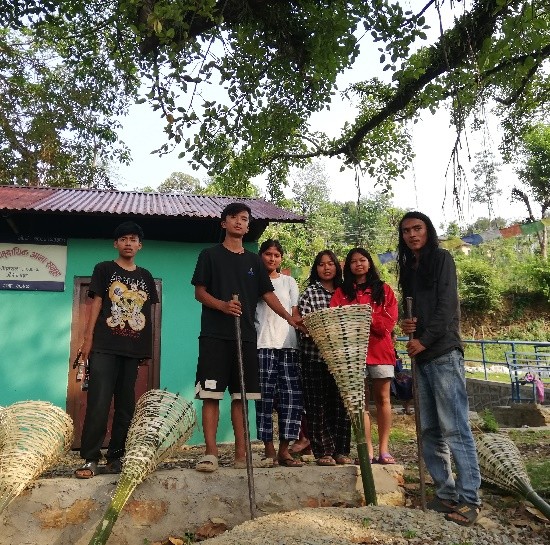
initiative forward, a youth network was formed with the support of CWISH.
Today, local communities and youth are actively working to protect and preserve
nature. For that, I am sincerely grateful to the project and those who made it
possible.
Written by: Trijoti Pandey
-Chaurideurali Rural Municipality, Kavre
Recent Case Studies